
A drifting go kart for kids is safest and most fun when three things are in place before the first slide: a smooth, flat, traffic-free surface, a properly fitted helmet with gloves and pads, and an adult who teaches in stages. Start with straight-line driving and braking at the lowest speed, then add wide turns, then short controlled slides, and only then full spins and figure-eights. Most kids’ drift karts are electric caster karts that slide at low speed, which makes drifting a forgiving way to learn car control. This guide covers how kids’ drift karts slide, a step-by-step teaching plan, the best and worst surfaces, supervision rules, gear and simple maintenance.
Part of our Drift Karts & Drift Trikes guide — explore the full guide →
How a Drifting Go-Kart for Kids Slides
Most kids’ drift karts steer with the front and roll on hard, low-grip caster wheels at the rear. Those casters let the back end swing out easily. A slide starts in one of three ways:
- Sharp steering input at speed, which pushes the rear outward.
- A drift lever or bar, on models that have one, which changes how freely the rear moves.
- Weight shift, as the rider leans into a turn.
Recovery works the other way: easing off the lever, straightening the steering and steadying the throttle lets the kart regain direction. Teaching a child to both start and end a slide is the core skill. For the mechanics of drifting in general, including grip karts, see our how to drift a go-kart guide.
If you have not yet chosen a kart, read our buying guide to the drift kart for kids first. It covers types, sizing and features. This page assumes you have a kart and want to use it well.
Before the First Ride
Spend ten minutes on setup before the motor goes on:
- Fit check. Your child should reach the pedals and any drift lever without stretching, sit low and secure, and hold the steering with relaxed arms.
- Kart check. Confirm the battery is charged, the brake works, the casters spin freely and nothing is loose.
- Speed mode. Set the lowest speed and, if possible, lock it.
- Controls briefing. Show where the power switch is, how the brake works and what to do if the kart spins toward something: release the throttle and brake.
- Boundaries. Mark the driving area with cones and agree on the rules.
Best Drift Kart for Kids: our top 3 picks
| Product | Best for | Key features | Price | Buy |
|---|---|---|---|---|
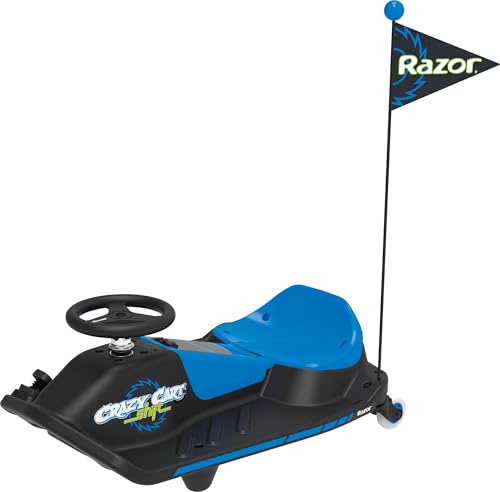
| Razor Crazy Cart Shift | Best overall drift kart for ages 6+ |
| $148.00as of Oct 27, 2026 5:28 am EDT | Buy now →Check current price |
| Razor Crazy Cart Sport | Best for skilled drifters aged 9+ |
| $379.00as of Oct 27, 2026 6:45 am EDT | Buy now →Check current price |
| Qaba 24V 9Ah Drift Kart | Best for longer drift sessions |
| $220.99as of Oct 27, 2026 6:17 am EDT | Buy now →Check current price |


Prices are Amazon’s listed prices as of the date and time shown and are subject to change; the price on Amazon at the time of purchase applies. As an Amazon Associate we earn from qualifying purchases.
How to Teach a Child to Drift a Go-Kart, Step by Step
Move to the next step only when your child is consistently in control at the current one. For many kids that takes several sessions, and there is no rush.
Step 1: Straight lines and stopping
Drive in straight lines between two cones and stop at a marked box. The goal is smooth throttle and confident braking. Every later skill depends on the child stopping reliably on command.
Step 2: Wide, slow turns
Set a large oval of cones and drive it in both directions without sliding. This builds steering feel and shows how the kart behaves when grip is near its limit.
Step 3: First controlled slides
On the oval, have your child add a little more steering or a short pull of the drift lever so the rear steps out, then straighten up to recover. Keep slides short and in an open part of the area. Praise the recovery more than the slide.
Step 4: Holding a drift
Once recoveries are consistent, practice holding a slide around a single cone using steady throttle and small steering corrections. This is where real car-control skills develop.
Step 5: Spins and figure-eights
Full 360-degree spins and figure-eight drifts around two cones come last. They need the most space, so widen the cone area and keep everyone else well back.
Keep sessions short. Tired kids make mistakes, and constant spinning drains the battery quickly anyway. End on a good run.
Best and Worst Surfaces for Drifting
Caster drift karts depend on the surface more than any other kart. The right one makes slides smooth and predictable; the wrong one makes them jerky or impossible.
| Surface | Drift Behavior | Caster Wear | Suitability |
|---|---|---|---|
| Sealed or smooth concrete | Smooth, predictable slides | Low to moderate | Best choice |
| Smooth asphalt | Good, a little more grip | Moderate to high | Good |
| Rough or broom-finished concrete | Jerky, less consistent | High | Usable with care |
| Polished or painted indoor floors | Very low grip, hard to control | Low | Only with permission and lots of space |
| Wet pavement | Unpredictable | Varies | Avoid |
| Grass, gravel, dirt or sand | Slides stop or snag | Can damage casters | Avoid |
Whatever the surface, sweep away sand, gravel and leaves first, since debris under a caster can trip the kart. The area must be level. Never use a driveway that slopes toward a street, and never drive on public roads or sidewalks. Shared spaces such as school lots or courts need the owner’s permission.
A full spin needs more room than most parents expect. Give the kart a generous clear circle, well away from walls, parked cars, poles, curbs and pools.
Common Beginner Mistakes and How to Fix Them
- Full throttle into every turn. The kart spins instead of sliding. Teach a steady, partial throttle through the slide and practice it around a single cone.
- Locking the steering at full lock. The kart keeps rotating and the child loses direction. Show how small steering corrections hold or end a drift.
- Looking at the obstacle. Kids tend to steer where they look. Coach them to look where they want the kart to go, not at the cone or wall.
- Forgetting the brake in a spin. Practice a “hands off the lever, foot on the brake” drill until it becomes automatic.
- Drifting too close to the edge. Keep slides in the middle of the area and widen the cone boundary as speed or confidence grows.
Short, specific feedback after each run works better than long explanations between sessions.
Supervision Rules That Work
- An adult watches every session from inside the area but outside the kart’s path.
- One kart in the area at a time for beginners. With experienced kids, add spacing rules and a clear direction of travel.
- Spectators, siblings and pets stay outside the cone boundary.
- Daylight or good lighting only.
- Speed increases are the adult’s decision, never the child’s.
- Stop the session if the surface gets wet, the battery is low or your child is tired.
Safety Gear for Kids Who Drift
Drifting involves spins and the occasional tip, so gear matters more than on a slow grip ride-on:
- Helmet: properly fitted and certified, worn every ride. Our go-kart helmets for kids guide covers sizing and certification standards.
- Gloves: protect hands if the kart tips and improve grip on the wheel.
- Knee and elbow pads: cheap insurance on hard pavement.
- Closed shoes: no sandals or bare feet near casters.
- Clothing: long pants and sleeves are ideal. Tie back long hair and remove scarves or cords that could catch in wheels.
Simple Maintenance
- Casters: check for flat spots, cracks and wobble. Replace them when worn, as uneven casters make slides unpredictable.
- Fasteners: spinning loads the frame sideways, so check steering and caster bolts regularly.
- Brake: confirm it still stops the kart firmly.
- Battery: charge after each session with the supplied charger, store it charged, and follow the manufacturer’s charging guidance.
- Cleaning: wipe off grit, especially around casters and the drive wheel.
From Driveway Drifting to Real Karting
Drifting teaches steering correction, throttle control and awareness of grip, which carry over to conventional karts. If your child wants to go faster or compete, the next step is a grip kart on a proper track. Our kids kart racing guide explains how to get started, and the drift kart hub covers the wider world of drifting machines.
Pros and Cons of Kids Drifting
Pros
- Teaches car control and recovery at low speed
- Big fun without high speeds
- Easy to structure into clear learning steps
- Electric drift karts are quiet and cheap to run
Cons
- Needs a large, smooth, flat and traffic-free area
- Spins and tips make full gear essential
- Rear casters and batteries wear with heavy use
- Requires constant adult supervision
Frequently Asked Questions
How do I teach my child to drift a go-kart?
Is drifting safe for kids?
What is the best surface for a kids drift kart?
How much space does a kids drift kart need?
What gear should a child wear for drifting?
Can siblings drift together?
Final Thoughts
Drifting is one of the most enjoyable ways for kids to learn car control, provided you build it in stages. Choose the right surface, insist on full gear, supervise every session and let skill, not impatience, decide when the speed goes up. For model recommendations, see our roundup of the best drift karts for kids.