
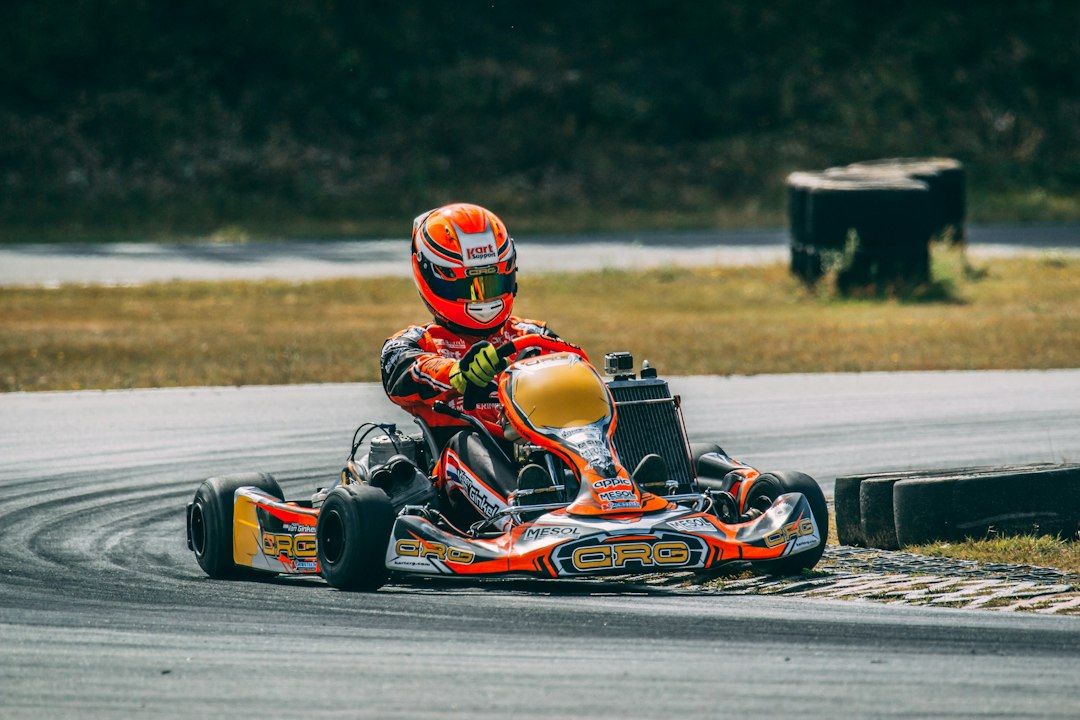
A go kart engine 150cc sits between small kids’ engines and the common 196cc to 212cc builds. In practice, most 150cc kart engines are either GY6-type scooter engines with a built-in CVT transmission or utility-style horizontal-shaft four-strokes. Each fits differently, drives differently, and needs different parts. This guide explains the two main types, how they compare, where 150cc engines are commonly used, what they typically cost in USD, how to fit and maintain one, and when it makes more sense to choose a larger engine. If you are mainly curious about top speed, we cover that separately; this page is about choosing and running the engine itself.
Part of our Go-Kart Engines & Drivetrain guide — explore the full guide →
What Is a 150cc Go-Kart Engine?
Displacement measures the swept volume of the cylinder, so a 150cc engine has a cylinder volume of about 150 cubic centimeters. That puts it in a middle ground: more power than the 79cc to 100cc engines on youth karts, but less than the 196cc to 212cc utility engines that dominate DIY builds.
The most common 150cc engine in karting is the GY6, an air-cooled, single-cylinder four-stroke originally designed for scooters and widely produced by many manufacturers. It is used heavily in budget buggies and recreational karts. Utility-style 150cc horizontal-shaft engines also exist, though they are less common than the 212cc class.
For speed estimates by setup, see our separate guide to how fast a 150cc go-kart is.
Types of 150cc Kart Engines
GY6-type engines with CVT. These engines come as a unit with a continuously variable transmission, much like a scooter. Many versions include an electric starter and a charging system. The CVT gives smooth, automatic acceleration without a separate clutch. Some buggy versions add a reverse gearbox. They need a wiring harness, an ignition switch, and a battery, which adds complexity.
Utility horizontal-shaft engines. These look like smaller versions of the familiar 212cc kart engines. They bolt to a flat engine plate and drive the axle through a centrifugal clutch or torque converter and a chain. They are simpler to wire, often needing only a kill switch.
Older and specialty engines. Some vintage karts and minibikes used other engines in this range, including two-strokes. Parts availability for these varies widely.
A sibling guide on the GY6 go-kart engine covers that engine family in depth.
Best Go Kart Engine: our top 3 picks
| Product | Best for | Key features | Price | Buy |
|---|---|---|---|---|
| maXpeedingrods MXR212R | Best overall 212cc |
| $149.99as of Nov 17, 2026 1:03 pm EST | Buy now →Check current price |
| maXpeedingrods MXR212E | Best electric start |
| $209.99as of Nov 17, 2026 1:03 pm EST | Buy now →Check current price |
| GENMAX GM212R | Best support plan |
| $169.99as of Nov 17, 2026 1:03 pm EST | Buy now →Check current price |


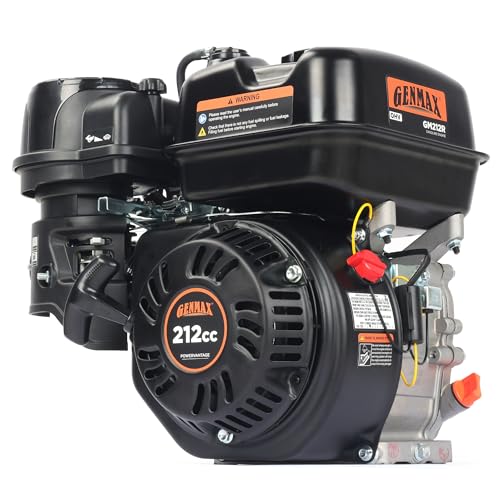
Prices are Amazon’s listed prices as of the date and time shown and are subject to change; the price on Amazon at the time of purchase applies. As an Amazon Associate we earn from qualifying purchases.
150cc Engine Types Compared
| Feature | GY6-Type with CVT | Utility Horizontal-Shaft |
|---|---|---|
| Transmission | Built-in CVT | Separate clutch or torque converter |
| Starting | Often electric plus kick | Usually pull start |
| Wiring | Harness, CDI, regulator, battery | Minimal, kill switch |
| Mounting | Pivot or swing mount, model-specific | Flat plate, common bolt pattern |
| Typical use | Buggies, factory recreational karts | DIY karts, minibikes |
| Parts support | Wide aftermarket | Good for common models |
Go Kart Engine 150cc Uses
A 150cc engine suits teenagers moving up from a youth kart, lighter adults on recreational karts, and two-seat budget buggies that are driven at moderate speed. Its power is enough for a fun yard or trail kart without being intimidating. It is also popular as a replacement engine for factory buggies that shipped with a GY6.
It is not a racing engine in most organized karting. Sprint racing classes are defined by specific engines and rules from the sanctioning body, and a generic 150cc engine will not normally be eligible.
Cost of a 150cc Engine
Complete GY6-type engines with CVT commonly sell in the range of about $350 to $800, depending on whether they include the carburetor, wiring harness, starter, and exhaust. Utility-style 150cc engines often cost around $200 to $450. Used engines can be cheaper but carry risk; check compression and look for oil leaks before buying.
For a GY6 swap, budget extra for a wiring harness, battery, throttle cable, and mounting brackets. For a utility engine, budget for a clutch, chain, and engine plate.
How to Choose a 150cc Engine
Replacing an existing engine? Match the original type. Swapping a GY6 for another GY6 is far simpler than switching to a utility engine on a buggy designed around a CVT.
Building from scratch? A utility horizontal-shaft engine is easier to mount and wire on a simple frame. A GY6 makes sense if you want an automatic transmission with electric start.
Check the CVT length. GY6 engines come with short and long CVT cases. The length affects wheelbase fitment and which parts interchange.
Consider driver weight. A heavier driver or a two-seat kart may feel sluggish with 150cc. A 196cc or 212cc engine may be a better match; see our sibling guide on the 200cc go-kart engine.
Look at parts availability. Choose engines with common carburetors, filters, belts, and ignition parts so repairs stay affordable.
150cc vs 212cc: Which Should You Pick?
The 212cc horizontal-shaft engine is the default for DIY karts because it is cheap, plentiful, and supported by a huge range of clutches, torque converters, and performance parts. A 150cc engine makes sense mainly when the kart was designed around one, as with GY6-powered buggies, or when you specifically want less power for a younger driver.
If you are building a new single-seat kart for an adult and have no existing engine, the 212cc class usually gives more performance for similar money. If you are repairing a buggy with a CVT drive, staying with a 150cc GY6 keeps the swap simple and preserves the automatic transmission and electric start the kart was built around.
Fitting a 150cc Engine
For a utility engine, bolt it to a slotted engine plate so you can adjust chain tension, align the clutch sprocket with the axle sprocket, and fit a chain guard. For a GY6, the engine usually mounts on a pivot with a rear shock or a rigid bracket, depending on the kart. The CVT output drives the axle through a chain, and the wiring harness connects the CDI, regulator, starter relay, and ignition switch.
Check throttle cable routing so the throttle closes fully on release. Make sure the exhaust is shielded from the driver and from fuel lines.
Common 150cc Engine Problems
Hard starting. Stale fuel and a varnished carburetor are the usual cause. Clean the carburetor jets and fit fresh fuel before replacing parts. On a GY6, also check the battery, starter relay, and kill switch wiring.
Weak acceleration on a GY6. Worn CVT rollers, a glazed or stretched belt, or a weak clutch spring reduce performance. Replacing the belt and rollers as a set often restores pull.
Clutch slipping on a utility engine. Gearing that is too tall for the kart weight overloads the centrifugal clutch. A larger axle sprocket or a torque converter usually helps.
Overheating. Air-cooled engines rely on clean cooling fins and a shroud that directs airflow. Missing shrouds, packed mud, or a lean carburetor setting can cause overheating. Check the shroud and fins first.
Electrical faults. GY6 harnesses on budget karts can suffer from loose connectors and chafed wires. Inspect connectors, ground straps, and the regulator if the battery will not stay charged.
Maintenance
Change oil at the intervals in the manufacturer’s manual, especially during break-in. Clean or replace the air filter often on dusty trails. On a GY6, inspect the CVT belt, rollers, and clutch for wear, and check valve clearance at the specified intervals. On a utility engine, inspect the clutch and chain. Keep fuel fresh and the cooling fins clear.
Pros and Cons
A 150cc engine is a sensible middle ground, with clear limits.
Pros
- More power than youth engines without being intimidating
- GY6 versions offer automatic CVT and electric start
- Wide aftermarket parts availability
- Good replacement option for budget buggies
Cons
- Less power than common 212cc kart builds
- GY6 wiring and mounting add complexity
- Not eligible for most organized racing classes
- Can feel slow with heavy drivers or two seats
Frequently Asked Questions
Is a 150cc engine good for a go-kart?
What is the difference between a GY6 and a utility 150cc engine?
Can I replace a 150cc GY6 with a 212cc engine?
How much does a 150cc go-kart engine cost?
Does a 150cc engine need a clutch?
Can a 150cc kart engine be used for racing?
Final Thoughts
A go kart engine 150cc makes sense for teens, light adults, and budget buggies where smooth, moderate power matters more than outright speed. Match the engine type to your kart’s existing drive, check CVT length and mounting before buying, and keep up with belt and oil maintenance. For the bigger picture on engines, return to our go-kart engine guide.