

A go kart engine 200cc class is the most popular power plant for DIY and recreational karts. In practice the label covers a family of air-cooled, single-cylinder, overhead-valve four-stroke engines from roughly 196cc to 212cc, most of them closely related to a widely copied industrial design. They are affordable, easy to work on, and supported by a huge range of clutches, torque converters, and upgrade parts. This guide focuses on choosing, fitting, and running one: what defines the class, the main variants, typical prices, how to match the engine to your kart, installation basics, maintenance, and upgrade limits.
Part of our Go-Kart Engines & Drivetrain guide — explore the full guide →
What Is a 200cc Go-Kart Engine?
Most engines sold as 200cc kart engines are horizontal-shaft industrial engines originally designed for pumps, generators, and pressure washers. They typically produce somewhere around 5.5 to 7 horsepower in stock form, depending on the exact model and how the manufacturer rates it. Engines labeled 196cc, 200cc, 208cc, and 212cc often share the same basic architecture and mounting pattern, with differences in bore, carburetor, and detail parts.
Many are clones of a well-known Japanese industrial engine, which is why parts often interchange between brands. The result is an enormous aftermarket. For background on clone engines, see our clone go-kart engine guide, and for one of the most popular examples, our Predator 212 engine guide.
Types of 200cc-Class Kart Engines
Standard recoil-start engines. The most common and cheapest version, with a pull starter, mechanical governor, and a 3/4 inch crankshaft. Suits most yard karts and DIY builds.
Electric start versions. The same engine with a starter motor and flywheel ring gear, plus a battery. Convenient for families, at extra cost and weight.
Racing-specification engines. Some racing classes use engines in this size range built and sealed to specific rules. They are not interchangeable with generic engines for racing purposes, so check your class rulebook.
Vertical-shaft engines. Lawn mower style engines in a similar size range. They are not well suited to karts without special drive arrangements, and horizontal-shaft engines are the standard choice.
CVT engines from buggies. Some small buggies use 200cc-class engines with built-in CVT transmissions and reverse. These are different from industrial engines and are usually specific to the vehicle.
Best Go Kart Engine: our top 3 picks
| Product | Best for | Key features | Price | Buy |
|---|---|---|---|---|
| maXpeedingrods MXR212R | Best overall 212cc |
| $149.99as of Nov 17, 2026 1:03 pm EST | Buy now →Check current price |
| maXpeedingrods MXR212E | Best electric start |
| $209.99as of Nov 17, 2026 1:03 pm EST | Buy now →Check current price |
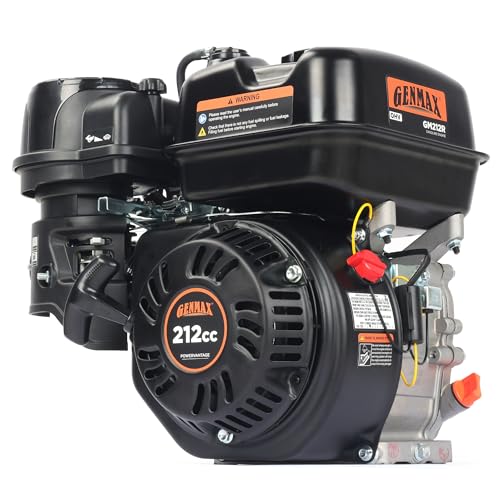
| GENMAX GM212R | Best support plan |
| $169.99as of Nov 17, 2026 1:03 pm EST | Buy now →Check current price |


Prices are Amazon’s listed prices as of the date and time shown and are subject to change; the price on Amazon at the time of purchase applies. As an Amazon Associate we earn from qualifying purchases.
Go Kart Engine 200cc Options Compared
| Engine Type | Typical New Price | Starting | Drive Options | Best For |
|---|---|---|---|---|
| Standard recoil 196cc to 212cc | About $150 to $400 | Pull start | Clutch or torque converter | Most DIY and yard karts |
| Electric start version | About $300 to $600 | Key or button plus pull | Clutch or torque converter | Family karts |
| Racing-spec engine | Varies by class | Pull start | Class-specified clutch | Sanctioned racing |
| Buggy CVT engine | Varies widely | Usually electric | Integrated CVT | Replacement in matching buggies |
Prices are typical ranges and change with brand, features, and availability.
How to Choose the Right 200cc Engine
Check the crankshaft. Most engines in this class have a 3/4 inch keyed shaft, but lengths vary. Make sure the shaft is long enough for your clutch or torque converter driver.
Confirm the mounting pattern. Many share a common bolt pattern, but confirm against your engine plate before buying.
Match the drive. A centrifugal clutch is simple and cheap, while a torque converter gives better low-speed pull and is the more popular choice for yard and off-road karts. Our guides to the go-kart clutch and go-kart torque converter explain the differences.
Consider weight and terrain. One 200cc-class engine moves a single adult on a light kart comfortably. A heavy two-seater, deep grass, or hills may call for a larger engine.
Parts support. Choose engines with good parts availability and documentation. The best-supported models have readily available carburetors, gaskets, and filters.
Installation Basics
Bolt the engine to a sturdy engine plate with the correct hardware and lock washers or thread locker. Align the engine drive sprocket or torque converter with the axle or jackshaft sprocket using a straightedge, and set the chain tension so there is a small amount of slack. Fit a chain guard to protect the driver.
Connect the throttle cable to the carburetor linkage so the throttle returns fully closed when released. Fit a kill switch the driver can reach easily. Fill with the oil grade the manufacturer recommends; many engines ship without oil and can be damaged instantly if started dry.
Speed and Performance
Top speed depends on gearing, kart weight, tire size, and whether the governor is in place, so there is no single answer. For realistic figures and the factors behind them, see our 200cc go-kart top speed guide. This article focuses on choosing and running the engine rather than speed figures.
Maintenance
Change the oil after the break-in period specified in the manual, then at regular intervals. Small engines hold little oil, so frequent changes are cheap insurance. Clean or replace the air filter often, especially on dusty off-road karts. Check the spark plug, valve clearance, and fuel lines periodically.
Use fresh fuel and add a stabilizer if the kart sits for weeks. Old fuel is the most common cause of hard starting and rough running in these engines. Drain the carburetor bowl before long storage.
Buying a Used 200cc Engine
Used engines in this class are plentiful because they come off pressure washers, generators, and old karts. They can be good value, but inspect before paying. Check the oil level and color first; milky oil suggests water contamination, while very dark, thin oil suggests neglect. Pull the starter slowly and feel for even compression, then ask the seller to start the engine from cold.
Listen for knocking or tapping, watch for blue smoke, and look for oil leaks around the crankcase cover and valve cover. Check that the crankshaft is straight by watching the shaft end as the engine idles. Engines taken from generators or pumps may have short or threaded shafts that will not accept a kart clutch, so confirm shaft type before buying.
Common Problems and Fixes
Hard starting. Usually stale fuel or a dirty carburetor. Drain old fuel, clean the carburetor, and check the spark plug.
Surging at idle. Often a partly blocked carburetor jet or an air leak at the intake gasket.
Loss of power. Check the air filter, spark plug, and valve clearance, and make sure the clutch or torque converter is not slipping.
Excessive vibration. Look for loose engine mount bolts, a bent crankshaft, or an unbalanced clutch.
Upgrades and Their Limits
Common upgrades include free-flowing air filters, exhausts, carburetor jetting, and governor removal. These can raise power, but they also raise stress on the connecting rod, flywheel, and valve springs. Removing the governor without fitting a billet flywheel and connecting rod can be dangerous, because stock cast flywheels and rods may fail at high rpm.
Upgrades also change the kart. A faster engine needs better brakes, a stronger chain, and a driver ready for higher speeds. If a kart is used by children, keep the governor in place. Racing classes based on these engines usually restrict modifications, so check the current rulebook before changing anything.
Pros and Cons
The 200cc-class engine is popular for good reasons, but it has limits.
Pros
- Affordable and widely available
- Huge range of clutches, converters, and upgrades
- Simple to maintain with basic tools
- Parts often interchange between brands
Cons
- Modest power for heavy two-seat karts
- Governor removal needs supporting upgrades
- Quality varies between brands
- Vibration can loosen hardware over time
Frequently Asked Questions
How much horsepower does a 200cc go-kart engine make?
Is a 196cc engine the same as a 212cc engine?
What clutch fits a 200cc kart engine?
Can a 200cc engine carry two adults?
Should I remove the governor on a 200cc engine?
How often should I change the oil?
Final Thoughts
A go kart engine 200cc class is the default choice for DIY and recreational karts because it is cheap, simple, and endlessly upgradeable. Match the shaft, mount, and drive to your kart, keep up with oil and filters, and be careful with performance upgrades. For a wider comparison of engine sizes, see our main go-kart engine guide.