

A pedal power go kart runs entirely on the rider, with no engine, battery or fuel. That simplicity is exactly why pedal karts remain popular with families, schools, campgrounds and adults who want a quiet way to get outside and moving. Pedal karts range from small plastic models for preschoolers to steel-framed adult karts with gears, hand brakes and bench seats. This guide explains how pedal karts work, the main types and age ranges, how gearing and brakes differ, what they typically cost, and what to look for so the kart fits the rider and survives years of use.
Part of our Buying a Go-Kart guide — explore the full guide →
What Is a Pedal Power Go-Kart?
A pedal power go-kart is a low, four-wheeled vehicle propelled by pedals, much like a bicycle but with a seat, steering wheel and stable four-wheel stance. The pedals turn a crank connected to the rear axle through a chain or direct drive, and the rider steers with a wheel or handlebars.
Because there is no motor, pedal karts are quiet, simple and safe at the speeds most riders can achieve. They are often allowed in places where motorized karts are not, such as parks, campgrounds and driveways in quiet neighborhoods. For a broader look at the category, see our pedal go-kart guide.
How Pedal Power Karts Work
The pedal crank drives the rear axle through one of three common systems. Direct drive connects the pedals straight to the wheels or axle with no freewheel, so the pedals turn whenever the kart moves. This is common on small children’s karts and keeps the design simple, but it means pedaling backward slows or reverses the kart.
Chain drive with freewheel works like a bicycle. You can coast without the pedals turning, and many models include a coaster brake or hand brake. This is common on larger kids and adult karts.
Geared chain drive adds multiple gears, sometimes with a bicycle-style derailleur or an internal hub. Gears let riders climb small slopes and cruise faster on flat ground. These are typically found on adult and premium karts.
Brakes vary too. Small karts may use friction or rear-wheel brakes, while larger karts often have hand-operated drum or disc brakes. Better brakes matter on heavier karts and on slopes.
Best Cheap Go-Kart: our top 3 picks
| Product | Best for | Key features | Price | Buy |
|---|---|---|---|---|
| Aosom Kids Pedal Go Kart | Best overall budget go-kart |
| $142.49as of Oct 27, 2026 8:53 am EDT | Buy now →Check current price |
| STARRIVER 24V Drift Kart | Best entry-level electric kart |
| $299.99as of Oct 27, 2026 6:45 am EDT | Buy now →Check current price |
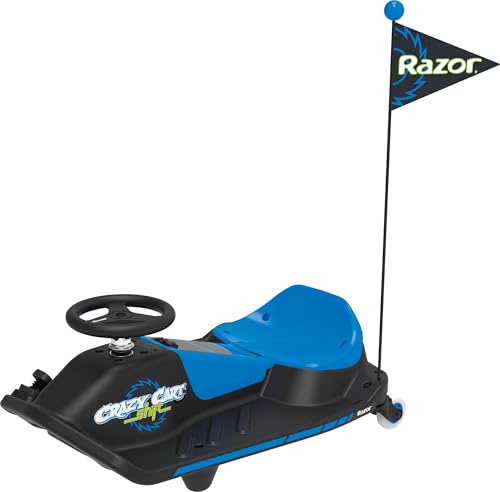
| Razor Crazy Cart Shift | Best simple 12V kart |
| $148.00as of Oct 27, 2026 5:28 am EDT | Buy now →Check current price |


Prices are Amazon’s listed prices as of the date and time shown and are subject to change; the price on Amazon at the time of purchase applies. As an Amazon Associate we earn from qualifying purchases.
Types of Pedal Power Go-Karts
Toddler and preschool pedal karts are lightweight, often plastic-bodied karts for children roughly 3 to 5 years old. They use direct drive and simple steering.
Kids pedal karts suit children roughly 4 to 12 and often feature steel frames, adjustable seats, pneumatic or EVA tires, and a freewheel and hand brake on larger models. Our pedal go-karts for 8 to 12 year olds guide covers that age band.
Adult pedal karts have larger frames, higher weight ratings and often gears. They are used for fitness, recreation and rental fleets. See our pedal go-kart for adults guide.
Multi-rider pedal karts seat two or more people, sometimes with pedals for each rider. They are common at resorts and campgrounds. Our 4 person pedal kart guide covers the larger formats.
Pedal Kart Types Compared
| Type | Typical Age or Rider | Drive | Brakes | Typical Price Range |
|---|---|---|---|---|
| Toddler pedal kart | About 3 to 5 | Direct | Basic or none | $60 to $150 |
| Kids pedal kart | About 4 to 12 | Direct or chain with freewheel | Hand or coaster | $100 to $400 |
| Adult pedal kart | Teens and adults | Chain, often geared | Hand drum or disc | $300 to $1,200 |
| Multi-rider pedal kart | Families and groups | Chain, multiple cranks | Hand drum or disc | $800 to $3,000+ |
Prices are typical ranges and vary with brand, materials and features.
Benefits of Pedal Power
Pedal karts offer exercise, quiet fun and low running costs. Children build leg strength and coordination, and adults get low-impact cardio without the balance demands of a bicycle.
They also need very little maintenance. With no engine, battery or fuel, upkeep is mostly chain lubrication, tire pressure checks and occasional brake adjustment. They can be stored indoors without fumes or fire concerns.
Finally, pedal karts are a good introduction to driving skills. Children learn steering, braking and spatial awareness at low speeds before moving to motorized karts later.
Cost of a Pedal Power Go-Kart
Toddler pedal karts usually cost $60 to $150. Kids pedal karts with steel frames and hand brakes typically range from $100 to $400. Adult pedal karts generally cost $300 to $1,200, and multi-rider or commercial-grade karts can exceed $3,000.
Running costs are minimal: occasional tires, chain lubricant, brake pads or cables and seat replacements. A good steel kart can last many years, which makes it a strong value compared with toys that are outgrown or broken quickly.
How to Choose a Pedal Power Go-Kart
Start with rider size. Check the age range, maximum weight and inseam or leg-length range. Adjustable seats extend the useful life of a kart by allowing it to grow with a child.
Look at frame construction. Steel frames are stronger and more durable than plastic, especially for heavier riders or rough use. Powder coating helps protect against rust.
Check the drive and brakes. A freewheel and hand brake are better for older kids and adults. Direct drive is fine for younger children on flat ground.
Consider tires. Pneumatic tires give a smoother ride on rough surfaces but can puncture. EVA or solid rubber tires are maintenance-free but ride harder. Plastic wheels are noisy and slippery on smooth surfaces.
Think about features. Gears, adjustable steering, seat belts, safety flags and a parking brake add value. Heavier riders and families who share one kart between teens and adults should read our heavy-duty pedal go-kart guide, which covers reinforced frames and higher weight ratings.
Pedal Power vs Electric Karts
Many families weigh a pedal kart against a small electric kart. The electric option is faster and less tiring, which appeals to children who want speed, but it adds a battery that needs charging and eventually replacing, and it usually costs more for a comparable frame.
A pedal kart gives the child full control of speed, since the kart only goes as fast as they pedal. That makes it easier for parents to manage in a driveway or park. It also builds fitness and does not stop working when a battery runs flat halfway through the afternoon.
For very young children, pedal karts are usually the better first step. Older children who already ride confidently may enjoy an electric kart more, but many families keep a pedal kart for everyday use and treat motorized karting as an occasional track activity.
Safety Tips
Even at pedal speeds, a helmet is a good idea, especially for children riding near slopes or traffic. Ride on smooth, flat surfaces away from roads, and supervise young children.
Check the kart regularly. Make sure the brakes work, the chain is lubricated and tensioned correctly, the tires are inflated and the steering is tight. Loose bolts and worn brake cables are common issues on older karts.
Be careful on hills. Pedal karts can gain speed quickly downhill, and small brakes may struggle. Teach children to brake early and avoid steep slopes.
Pros and Cons
Pedal karts are simple and healthy, but they have limits.
Pros
- Quiet, emission-free and allowed in more places
- Great exercise for kids and adults
- Very low running and maintenance costs
- Simple and durable steel models last for years
Cons
- Speed is limited by rider fitness
- Hills can be tiring or require gears
- Cheap models may have weak brakes
- Larger adult and multi-rider karts are bulky to store
Frequently Asked Questions
What age is a pedal power go-kart for?
How fast can a pedal go-kart go?
Do pedal karts need maintenance?
Are pedal power go-karts good exercise?
Can adults ride pedal go-karts?
Are pedal karts safe for young children?
Final Thoughts
A pedal power go kart is an easy, quiet and healthy way for kids and adults to enjoy karting without engines or batteries. Match the kart to the rider, prioritize a sturdy frame and good brakes, and keep up basic maintenance. To compare models for children, see our best go-karts for kids by age roundup.