

A vintage pedal go kart is a piece of childhood history: a steel or wooden pedal-driven kart or pedal car built decades ago, often styled after the race cars, tractors and karts of its day. Collectors buy them for display, families restore them for grandchildren, and some still ride them. This guide explains what counts as a vintage pedal go-kart, the main types and drive systems, how to identify the maker and era, typical USD values, how restoration usually goes, and whether an old pedal kart is safe for a child to ride today. It also covers what to check before you buy one at an auction, antique shop or online.
Part of our Kids Go-Karts guide — explore the full guide →
What Is a Vintage Pedal Go Kart?
Pedal cars have been made for children for well over a century, with many classic examples produced in the mid twentieth century. When karting took off, some toy makers began producing pedal vehicles shaped like low, open go-karts rather than miniature cars. Collectors generally call pedal karts and pedal cars “vintage” when they are several decades old, though there is no strict cut-off.
Most were made of pressed steel with painted finishes, rubber or solid tires, and simple crank drives. Brands such as Murray and AMF were well-known pedal car makers in the United States, and many other manufacturers in North America and Europe built pedal vehicles of varying quality. For context on modern pedal karts, see our pedal go-kart guide.
Types of Vintage Pedal Karts
Pressed-steel pedal cars. The classic style, with a stamped steel body shaped like a car, fire truck or race car. These are the most widely collected.
Open-frame pedal karts. Tubular or flat-steel frames with a seat and exposed wheels, styled after early go-karts. These are less common than pedal cars and tend to show more wear.
Pedal tractors. Farm-style pedal tractors are a large collecting category of their own, often linked to tractor brands of the era.
Wooden and handmade pedal karts. Homebuilt and small-workshop examples in wood or mixed materials. Values vary widely depending on craftsmanship and history.
Best Cheap Go-Kart: our top 3 picks
| Product | Best for | Key features | Price | Buy |
|---|---|---|---|---|
| Aosom Kids Pedal Go Kart | Best overall budget go-kart |
| $142.49as of Oct 25, 2026 4:39 am EDT | Buy now →Check current price |
| STARRIVER 24V Drift Kart | Best entry-level electric kart |
| $299.99as of Oct 25, 2026 4:39 am EDT | Buy now →Check current price |
| Razor Crazy Cart Shift | Best simple 12V kart |
| $148.00as of Oct 25, 2026 4:16 am EDT | Buy now →Check current price |


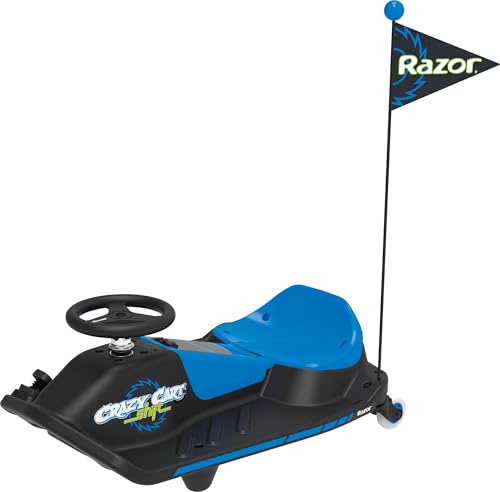
Prices are Amazon’s listed prices as of the date and time shown and are subject to change; the price on Amazon at the time of purchase applies. As an Amazon Associate we earn from qualifying purchases.
Drive Systems Explained
Crank drive. Pedals push rods connected to a cranked rear axle, so the wheels turn as the child pushes back and forth. This is the most common system in older pedal cars.
Chain drive. A bicycle-style crank and chain turn the rear axle. Chain drives appeared on some pedal karts and are smoother but have more parts to restore.
Direct pedal on wheel. Very simple designs had pedals attached directly to a wheel or axle, more common on early or budget toys.
Vintage Pedal Go Kart Types Compared
| Type | Common Material | Drive | Collector Interest | Restoration Difficulty |
|---|---|---|---|---|
| Pressed-steel pedal car | Stamped steel | Crank | High for popular models | Moderate, body dents and rust |
| Open-frame pedal kart | Steel tube or flat bar | Crank or chain | Moderate | Moderate, frame and drive parts |
| Pedal tractor | Steel and cast parts | Chain or crank | High with tractor collectors | Moderate to high |
| Wooden or handmade | Wood, mixed metal | Varies | Varies by craftsmanship | Low to moderate |
How to Identify the Maker and Era
Look for decals, badges and stampings. Many pedal vehicles carry a maker’s name on a badge, decal or stamped into the body or underside. Even faded traces can help.
Study construction details. Wheel style, hubcaps, steering wheel shape, pedal design and the way the body is joined all changed over time and between makers.
Compare with reference material. Collector books, catalog reprints and online collector groups are the best resources. Photograph the vehicle from all sides and close up on any markings before asking for help.
Watch for reproductions. Some popular designs have been reproduced. Reproductions are fine as toys or decorations but are usually worth much less than originals. Newer welds, modern fasteners and fresh stampings can be clues. Our vintage go-kart identification guide covers similar techniques for motorized karts.
What Is a Vintage Pedal Go Kart Worth?
Values depend on maker, model, rarity, condition and originality. As a broad USD guide:
- Common pedal cars and karts in rough condition: often under a couple of hundred dollars.
- Complete, original examples in fair to good condition: commonly a few hundred dollars.
- Desirable models in excellent original or quality restored condition: can reach the high hundreds or into four figures.
- Rare models with documented history: can be worth considerably more to the right collector.
Originality often matters more than shine. An unrestored example with honest wear can be worth more than a poorly restored one. Check recent completed sales rather than asking prices to judge value. For motorized karts from the same eras, see our guide to vintage go-karts for sale.
Buying Checklist
- Completeness. Missing steering wheels, hubcaps, pedals and badges are common and can be hard to find.
- Rust. Surface rust is normal. Rust-through on the floor, seat or axle mounts is a bigger problem.
- Straightness. Check the body and frame for bends, cracks and crude repairs.
- Drive and steering. Turn the pedals and steering to see whether they move freely or are seized.
- Wheels and tires. Original tires may be cracked or missing. Reproduction tires are available for some models.
- Paint. Decide whether you want original paint or a vehicle to restore, and price accordingly.
Restoring a Vintage Pedal Kart
Decide on preservation or restoration. Cleaning and stabilizing original paint preserves history and often value. A full restoration makes sense for vehicles too damaged to preserve.
Document before disassembly. Photograph every part and how it fits. Bag and label small parts.
Treat rust properly. Remove rust mechanically or chemically, repair metal where needed, and prime with a suitable primer before painting.
Be careful with old paint. Older toys may have been painted with lead-based paint. Avoid dry sanding or grinding old paint without proper protection; consider professional stripping and follow local safety guidance.
Source parts carefully. Reproduction wheels, tires, decals and hardware exist for some popular models. Swap meets and collector groups are useful sources.
Keep the character. Use period-appropriate colors and decal styles if you want the vehicle to look authentic.
Can Children Ride a Vintage Pedal Kart?
Some vintage pedal karts are still used as toys, but modern safety expectations differ from those of past decades. Before letting a child ride one, check for sharp edges, pinch points around the crank and steering, loose or broken welds, and seized or wobbly wheels. Old paint may contain lead, so a vehicle with original paint is better kept for display or refinished with modern, child-safe coatings.
Older pedal vehicles also usually lack brakes, so ride only on flat, enclosed areas with close supervision. For everyday riding, a modern pedal kart with brakes and adjustable seating is generally the safer choice. Our guide to children’s pedal go-karts explains sizing and safety features.
Displaying and Storing
Store vintage pedal karts indoors, away from damp, direct sunlight and large temperature swings, which damage paint and promote rust. Clean gently with mild products, and avoid harsh polishes on original paint. If you display a collection, raise vehicles slightly on stands to keep tires from flat-spotting and to protect floors. For the wider world of old karts, see our vintage go-kart guide.
Pros and Cons
Collecting and restoring vintage pedal karts is rewarding, with some practical limits.
Pros
- Strong nostalgic and display appeal
- Simple mechanisms suit home restoration
- Active collector community and reference material
- Original examples can hold or gain value
Cons
- Original paint may contain lead
- Most have no brakes or modern safety features
- Missing parts can be hard to source
- Reproductions can be mistaken for originals
Frequently Asked Questions
How do I know if my pedal kart is vintage?
Is it better to restore or keep original paint?
Are vintage pedal karts safe for kids?
Where can I buy a vintage pedal kart?
Can I find replacement parts for old pedal cars?
Final Thoughts
A vintage pedal go kart combines nostalgia with honest, simple engineering. Identify it carefully, judge value from real sales, and decide early whether you want to preserve or restore it. If the goal is a ride-on toy for today’s children, pair your collectible with a modern pedal kart from our pedal go-kart guide.