
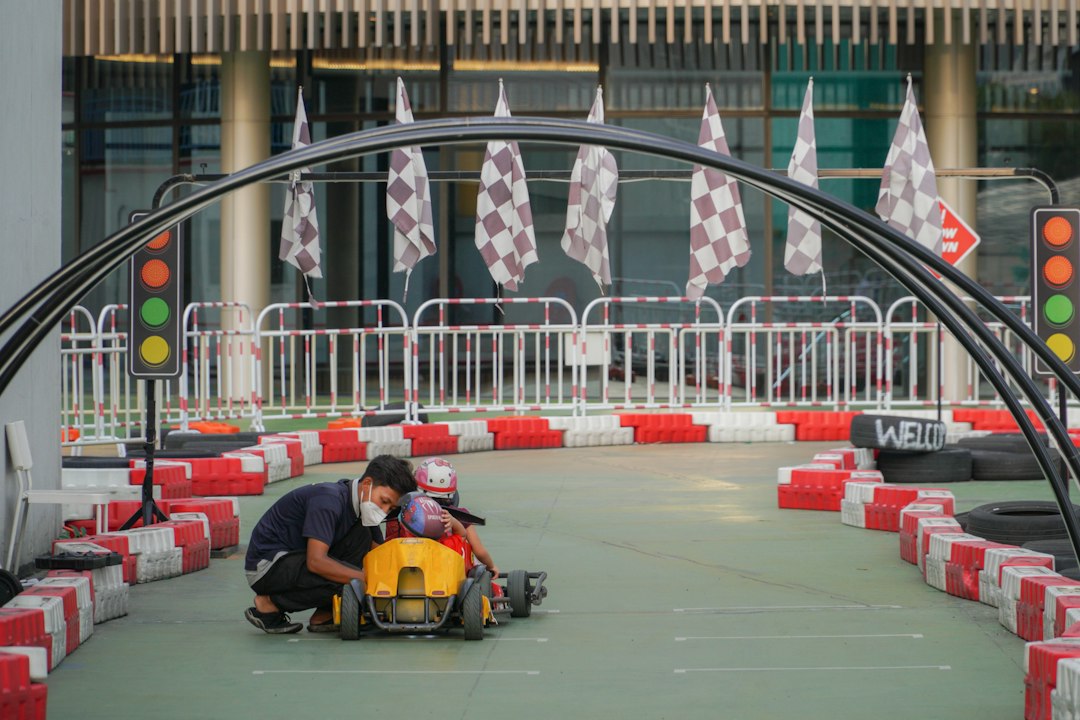
A motorized go kart for kids is a big step up from a pedal kart or ride-on toy. It moves faster, weighs more, and needs real steering and braking skills, so the decision deserves more thought than picking a color. Motorized kids’ karts come in two main forms, battery electric and small gas engines, and each suits different ages, spaces, and families. This guide explains how to tell whether your child is ready, how electric and gas karts compare, typical speeds and USD prices, what safety features matter, and what ownership really involves once the kart is in your garage.
Part of our Kids Go-Karts guide — explore the full guide →
Is Your Child Ready for a Motorized Go Kart?
Readiness depends on more than age. A child moving to a motorized kart should be able to follow instructions consistently, understand the difference between throttle and brake, and stop when asked, every time. They should be tall enough to reach the pedals with a slight bend in the knee and strong enough to steer the kart through a full turn.
Many children show readiness for a low-speed electric kart somewhere in the early school years, and for a gas kart a few years later, but every child is different. If your child has ridden a bicycle confidently and handled a pedal kart well, those are good signs. Our guide to go-karting age covers typical age guidance at tracks and for home karts.
A useful test is a supervised session in a rental or arrive-and-drive junior kart, where staff and track rules provide structure. It shows quickly whether the child enjoys driving and respects the rules.
Types of Motorized Go Kart for Kids
Low-voltage electric (12V to 24V). Quiet karts for younger children, usually with low top speeds and sometimes a parent remote. They are designed for driveways and flat, short grass.
Higher-voltage electric (36V and up). More power, larger frames, and higher speeds for older kids and early teens. Many include speed settings that can be locked by a parent.
Small gas karts. Four-stroke engines, commonly in the roughly 79cc to 100cc range for younger kids and larger for teens, with a centrifugal clutch and chain drive. Many have a throttle limiter screw or governor setting.
Off-road youth buggies. Caged karts with suspension and knobby tires for rough ground. They often have seat belts and a full roll cage, and many use gas engines.
Youth racing karts. Lightweight racing chassis for sanctioned junior classes, raced on tracks with restricted engines and full protective gear.
Best Go-Karts for Kids: our top 3 picks
| Product | Best for | Key features | Price | Buy |
|---|---|---|---|---|
| Qaba 24V Electric Go Kart | Best overall electric kart, ages 6 to 12 |
| $244.99as of Nov 18, 2026 1:22 pm EST | Buy now →Check current price |
| hauck Lightning Pedal Kart | Best pedal kart, ages 4 to 8 |
| $164.99as of Nov 18, 2026 1:22 pm EST | Buy now →Check current price |
| Razor Crazy Cart Shift | Best 12V starter kart, age 6+ |
| $148.00as of Nov 18, 2026 7:05 am EST | Buy now →Check current price |
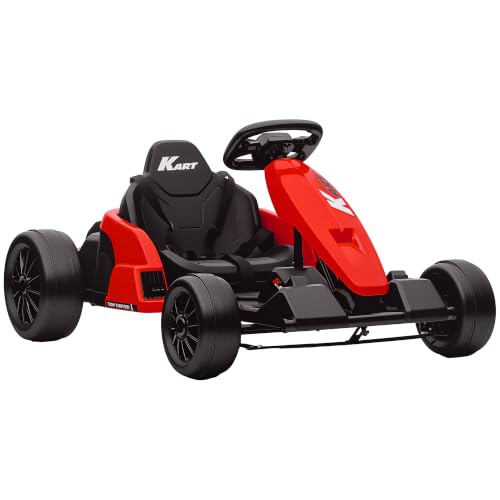

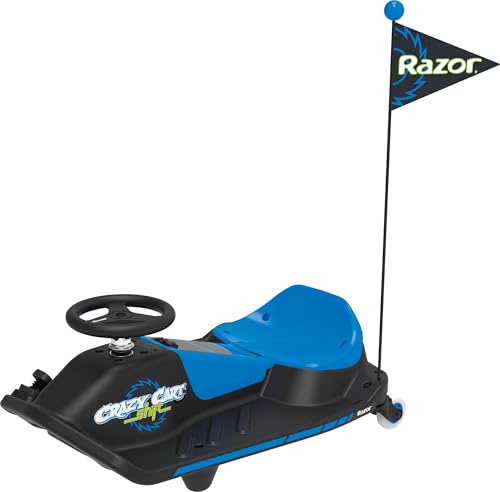
Prices are Amazon’s listed prices as of the date and time shown and are subject to change; the price on Amazon at the time of purchase applies. As an Amazon Associate we earn from qualifying purchases.
Electric vs Gas Motorized Go Kart for Kids
| Factor | Electric Kart | Gas Kart |
|---|---|---|
| Typical age fit | Younger kids through early teens | Older kids and teens |
| Typical top speed | Around 5 to 15 mph, often adjustable | Around 10 to 25+ mph, often limited |
| Run time | Often 30 to 60 minutes per charge | As long as there is fuel |
| Noise | Quiet | Loud |
| Maintenance | Low: battery care, brakes, chain | Moderate: oil, fuel, air filter, spark plug |
| Terrain | Pavement, flat lawns | Lawns, dirt, rough ground |
| Typical new price (USD) | $200 to $1,200 | $700 to $2,500 |
Speeds, run times, and prices are typical ranges and vary by model. Always check the manufacturer’s stated limits and recommendations.
For deeper coverage of each option, see our guides to the electric go-kart for kids and the gas-powered go-kart for kids.
Safety Features That Matter Most
Speed control. Look for a speed limiter, selectable speed modes, or an adjustable throttle stop. Start at the lowest setting and increase only as skills improve.
Remote or tether cut-off. Some electric karts include a parent remote that can stop the kart. Some gas karts include a tether kill switch. Both are valuable for beginners.
Real brakes. A mechanical disc or band brake on the rear axle gives predictable stopping. Test it every session.
Roll bar or cage and seat belt. On recreational and off-road karts, these add protection in a rollover. Belts must be worn whenever a cage is fitted.
Guards. Chain guards and engine covers keep fingers, hair, and clothing away from moving and hot parts.
Visibility. A tall safety flag helps others see a low kart, especially on property with other vehicles.
How to Choose the Right Kart
Fit first. Check pedal reach, steering reach, and head height under any roll bar. Choose a model with adjustable seat or pedals if possible.
Match power to experience. A first motorized kart should feel slightly underpowered to an adult watching. Power can always be increased later; confidence lost in an early crash is harder to rebuild.
Match the kart to your space. Driveways and small yards suit electric karts. Larger properties with rough ground suit gas karts or youth buggies.
Consider noise and neighbors. Gas karts can lead to complaints in residential areas, and some communities have rules about their use.
Think about support. Choose a brand with available spare parts such as batteries, chains, brake pads, and tires.
For a structured overview by age group, see our best go-karts for kids by age guide.
The Real Cost of Ownership
The purchase price is only part of the cost. Electric karts need occasional battery replacement, which can be a meaningful share of the original price on larger models. Gas karts need fuel, oil, filters, and spark plugs, and their engines need more regular attention.
Every motorized kart also needs safety gear. A good helmet is the most important purchase, followed by gloves and sturdy shoes. If your child moves into racing, costs rise sharply with racing gear, tires, fuel, entry fees, and maintenance.
Setting Up Safe Driving Rules
Agree on clear rules before the first drive. Define the driving area and mark its boundaries. Keep the kart away from roads, pools, slopes, and parked cars. Allow one kart at a time until the child is consistent, and always keep an adult present and watching.
Build skills in order: starting and stopping, then steering at low speed, then braking from higher speed, then cornering. Practice emergency stops regularly. Many families also set a rule that the helmet goes on before the child even sits in the kart.
Growing Into Bigger Karts
Children grow quickly, and a kart that fits perfectly now may be cramped in two years. Adjustable seats and pedals help, but eventually most families move up a size. Signs it is time include knees hitting the steering column, the head approaching the top of the roll bar, or the child consistently reaching the kart’s weight limit.
When moving up, keep the same approach: start the new kart at its lowest speed setting, practice in a familiar area, and raise power gradually. If your child shows a real interest in racing, a structured junior program at a local track is usually a better next step than a faster backyard kart, because it adds coaching, rules, and a controlled environment.
Maintenance Routine
Before each session, check tire pressure, brake function, chain tension, and steering bolts. For electric karts, charge after every use and store indoors. For gas karts, check oil level, keep the air filter clean, and use fresh fuel with a stabilizer if the kart sits for long periods. Let gas engines cool before refueling.
Pros and Cons
A motorized kart can be a rewarding hobby for kids, but it brings responsibility for parents.
Pros
- Builds coordination, judgment, and confidence
- Electric models are quiet and easy to run
- Gas models offer long run times and rough terrain ability
- Speed limiters let power grow with skill
Cons
- Real crash and injury risk without supervision
- Ongoing costs for batteries, fuel, and parts
- Gas karts are noisy for neighborhoods
- Kids may outgrow smaller karts quickly
Frequently Asked Questions
What age can a child drive a motorized go kart?
How fast should a first motorized kids kart go?
Is a gas or electric kart safer for kids?
Do kids need a helmet for a backyard go kart?
Can a motorized kids go kart be used on the street?
How long do kids electric go kart batteries last?
Final Thoughts
A motorized go kart for kids works best when the child is genuinely ready, the kart fits, and the power starts low. Electric suits most younger drivers and smaller spaces, while gas suits older kids on larger properties. When you are ready to shortlist models, our best go-karts for kids roundup is a good place to start.